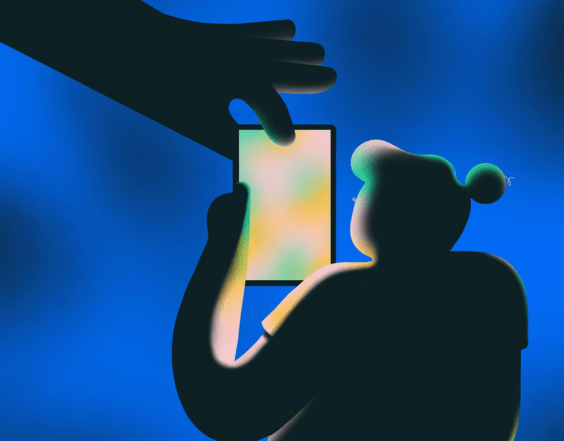
I’m turning 25 this year, and TikTok claims that’s when my brain will finally finish developing. More specifically, my prefrontal cortex — the part responsible for decision-making and impulse control.
You’ve probably seen the videos: “Your brain isn’t fully developed until you’re 25,” they say, which explains why we spend our early twenties making questionable choices, from blowing rent money on Sephora to stalking people on Instagram we should’ve blocked years ago.
It sounds comforting, this idea that there’s a scientific reason for the reckless mess of our twenties. Even better, TikTok suggests that 25 is a magical turning point where, thanks to our fully developed prefrontal cortex, we’ll finally get our lives together.
But something about that theory doesn’t sit quite right with me, and it’s not just because I ended up in A&E on my 24th birthday after smashing my head on a pool ledge — proof that even a little head trauma hasn’t improved my decision-making skills.
No, the problem with this TikTok-fuelled neuroscience isn’t just that it’s simplified to the point of delusion — it’s that it’s created this expectation that at 25, we’ll somehow transform into responsible adults, as if our prefrontal cortex will snap into place like a pair of noise-canceling headphones, filtering out every bad impulse.
The prefrontal cortex may mature around 25, but that doesn’t mean we’ll suddenly stop puking on our neighbour’s doorsteps after one too many shots. (Just me?)
The Prefrontal Cortex: Fact vs Fiction
Let’s start with the science TikTok loves so much. The prefrontal cortex is, indeed, responsible for things like decision-making, impulse control, and the ability to think ahead — basically, all the things you wish you were better at by now. Neuroscientists agree that this part of the brain continues to develop well into your twenties and typically finishes up around 25. The idea is that once it’s fully matured, we’ll be more capable of making rational, long-term decisions.
But here’s where TikTok misses the mark: even though the brain’s development may finish at 25, human behaviour doesn’t magically follow.
Brain maturation is not the neurological equivalent of a personality transplant. If you’ve spent the last five years sabotaging your sleep schedule, ignoring your budget, and ghosting people who care about you, you’re not going to suddenly wake up at 25 with an unshakable sense of self-discipline.
The real science — unlike the TikTok version — isn’t a promise of some life-altering transformation. It’s more like a nudge. Your brain might be equipped to make better decisions, but it doesn’t mean you’ll choose to do so.
My brain was technically functional enough to avoid slipping on wet pool steps, yet I still ended up in the hospital. So much for prefrontal cortex magic.
The Dangerous Promise of Control
What makes this TikTok theory seductive is the underlying promise of control — that at 25, you’ll suddenly have it. For those of us who’ve spent our twenties on the verge of chaos, this is a tempting narrative. It feeds into the broader cultural obsession with the idea that there’s a specific age, job, or relationship status where life will suddenly make sense.
But the problem is, this idea isn’t just wrong — it’s dangerous. By suggesting that brain development is the key to adult competence, we risk offloading responsibility for our lives onto biology. It becomes easy to think, “Well, of course I’ve been a mess — I’m not 25 yet.” But guess what? You’re going to hit 25 and still make dumb decisions. You’ll still buy things you can’t afford and drink one too many Vodka cokes.
The idea that we’ll be in control of ourselves just because a part of our brain matured is as absurd as thinking I’ll stop spilling food on myself just because I bought an adult wardrobe. (So many of my shirts have coffee stains on them that I’m seriously thinking of buying a bib for myself.)
TikTok’s obsession with the prefrontal cortex ignores how complicated adulthood actually is. Even if your brain is ready for long-term planning, your social, financial, and cultural environments aren’t.
Impulse control is harder when you’re bombarded with marketing engineered to exploit your every weakness, or when rent prices make you wonder if skipping breakfast is a viable savings plan.
The world doesn’t become easier to manage just because you’ve turned 25 — it remains stubbornly difficult.
So, What Really Happens at 25?
Here’s the thing: turning 25 doesn’t come with a sudden ability to fix your life. It comes with a growing awareness that you have to do that work yourself. Yes, the prefrontal cortex helps — it’s the part of your brain that says, “Maybe we don’t need to order another round of tequila shots.”
But the messy truth is that adulthood isn’t about brain development; it’s about learning how to navigate the world with all your impulses and bad habits intact.
The real trick to surviving adulthood isn’t waiting for your brain to save you. It’s understanding that growing up is an endless process of trial and error. It’s carrying a plastic bag in the back of your Grab car because you know, deep down, that even though you promised yourself you wouldn’t drink too much tonight, there’s a decent chance you’ll still puke on your shoes.
Maturity isn’t about eliminating those impulses — it’s about managing them with a little more grace and a lot more foresight.
There’s No Finish Line
TikTok’s promise of prefrontal cortex maturity gives us the illusion of a finish line, but real adulthood is more like a marathon that never ends.
At 25, you’ll be a little better at some things—maybe you’ll stick to a budget for two months instead of one, or maybe you’ll start flossing consistently.
But the big changes we expect — complete self-control, perfect judgment, an unshakable sense of direction — those aren’t delivered by a fully developed brain. They’re the result of years of small, often embarrassing, failures.
So as I approach 25, I’m letting go of the idea that my brain will finally turn me into the adult I always thought I’d become. Instead, I’m learning to embrace the messy, unpredictable reality of growing up.
Adulthood isn’t a clean break from your younger self; it’s a gradual shift, a constant recalibration of your relationship with the world. The prefrontal cortex might help me make better decisions, but the rest of me will still be impulsive, occasionally reckless, and — let’s be honest — probably still hungover and over budget.
If there’s any magic in turning 25, it’s not that your brain is finally done growing. It’s that you realise growing up never really ends.
 TO BE HONEST
Leave a comment