The romance genre in film and TV is having a renaissance. And if there’s one platform we can thank, it’s TikTok.
It’s like the Wattpad, AO3, and Tumblr of this decade, rolled into one — except, instead of long-form fanfic, we get 12-second edits of eye contact, hand flexes, and almost-kisses, all set to Ethel Cain, Hozier, or Lana Del Rey.
It’s devastating. It’s tragic. It’s beautiful.
Even Tumblr-era y/n imagines have been resurrected. And now, so have the books.
Studios have begun adapting popular backlist romance novels — the kind that once dominated Goodreads and early Bookstagram — into screen projects.
Voltage Pictures has brought titles like Beautiful Disaster and Marked Men to streaming platforms like Prime Video and Hulu.
Passionflix, founded by Tosca Musk (yes, that Musk), has become a one-stop shop for deeply faithful adaptations of fan-favorite series like Gabriel’s Inferno, Driven, Stage Dive, and soon, The Black Dagger Brotherhood.
The appetite is obviously there. Romance sells. But there’s something missing.
We’re getting more love stories than ever, and fewer of them make us feel anything.
Because what we’re missing isn’t chemistry. What we’re missing is the emotional high stakes. The friction and restraint. The thing that lives in a look, a silence, a breath held too long.
And the internet already knows what it’s called.
The #yearning hashtag alone has over 71.9K posts on TikTok, all fan edits of multi-fandom couples sharing quiet, agonizing moments of restraint. It’s not the kiss that makes us scream. It’s everything that happens before it. Or doesn’t.
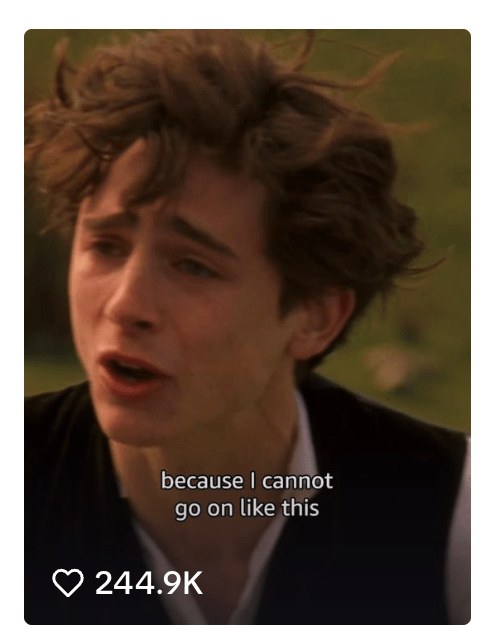
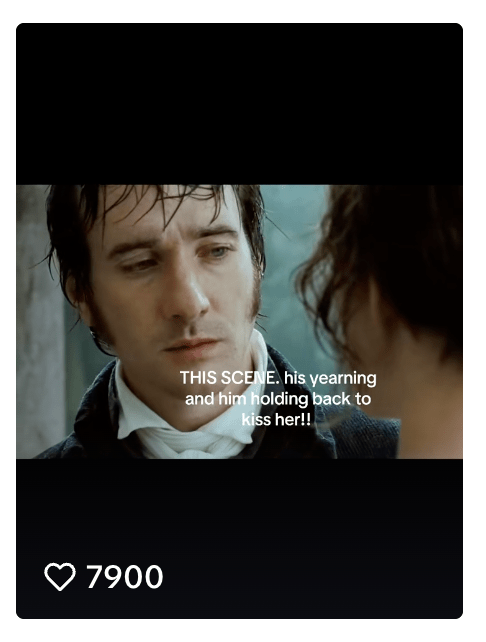
That kind of storytelling is rare these days. Most modern romance skips the ache entirely. We get a witty meet-cute, a flirtatious montage, and a convenient resolution. The tension is surface-level at best, and nonexistent at worst. And because there’s nothing in the way — no emotional baggage, no social rules, no deeper reason they shouldn’t be together — the payoff lands flat.
Compare that to a show like Forever, Netflix’s 2025 adaptation of Judy Blume’s novel, created by Mara Brock Akil. Keisha and Justin’s romance unfolds in the midst of high school chaos: a sex-tape scandal, college pressure, family dynamics, ADHD, financial strain. Their love isn’t epic in scale — it’s specific. Every miscommunication stings. Every decision costs something. The show lets the audience sit in the discomfort of waiting, of longing, of not knowing. And when they finally reach each other? It means something.
That’s what yearning is: love, stretched thin across fear, timing, and restraint.
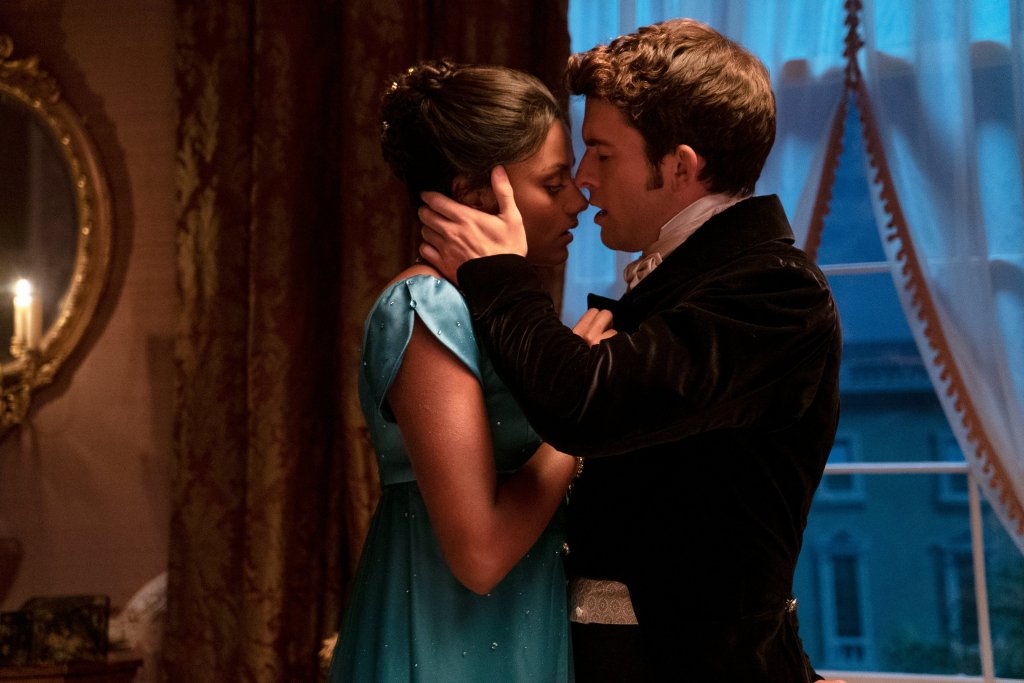
It’s what made Bridgerton Season 2 so satisfying. That hallway scene — Anthony walking past Kate, their eyes locked, pinkies almost touching — is iconic not because of what happens, but because of what doesn’t. The tension is unbearable because they’re doing the responsible thing. For now.
It’s why we still talk about the Pride and Prejudice (the 2005 version, specifically) hand flex. A second of physical contact, followed by Darcy silently clenching his hand in the aftermath. A moment so restrained, so filled with unspoken desire, it became the entire internet’s Roman Empire.
And it’s why One Day, in both its film and series versions, absolutely destroys people. Emma and Dexter’s love isn’t sexy or easy. It’s built on years of missed timing, disappointment, and near-confessions. The yearning comes from how close they get — and how long it takes for them to really get there.
This kind of love story lingers. Because it’s not about the kiss. It’s about the courage it takes to reach for it.
We’re not asking for every love story to be a tragedy. But we are asking for some weight. For stories that understand romance isn’t just about attraction — it’s about risk.
That’s why fantasy gets it right so often.
In Throne of Glass, Aelin and Rowan don’t flirt their way into love. They sort of trip into it unknowingly, and then they fight for it through grief, betrayal, war. Their connection grows not through quippy dialogue (although they do have those), but through earned trust and shared pain. When they finally admit what they are to each other, it feels hard-won — and that’s what makes it satisfying.
In Six of Crows, Kaz and Inej barely touch, yet their love story is one of the most emotionally charged in YA fantasy. Their yearning is so thick it’s almost unbearable. But to act on it would mean breaking the identities they’ve built to survive. Their restraint isn’t coy. It’s protective. And somehow, that makes it more romantic than any kiss could ever be.
The best love stories aren’t about getting what you want. They’re about what it costs to want it in the first place.
That’s why the kiss doesn’t hit the same when the story skips straight to it. That’s why the hookup montage leaves us cold. Because if there’s no fear, no fight, no waiting — then what’s the reward?
Sometimes, the most powerful romantic moment isn’t when two people come together. It’s when they almost do — but don’t. When they could say something, but stay silent. When they reach out… and stop themselves.
We don’t need every story to end in “happily ever after.” Sometimes, all we want is the ache. The almost. The lingering.
We don’t want a kiss just because it’s pretty. We want it because it took everything to get there.
 TO BE HONEST
Leave a comment